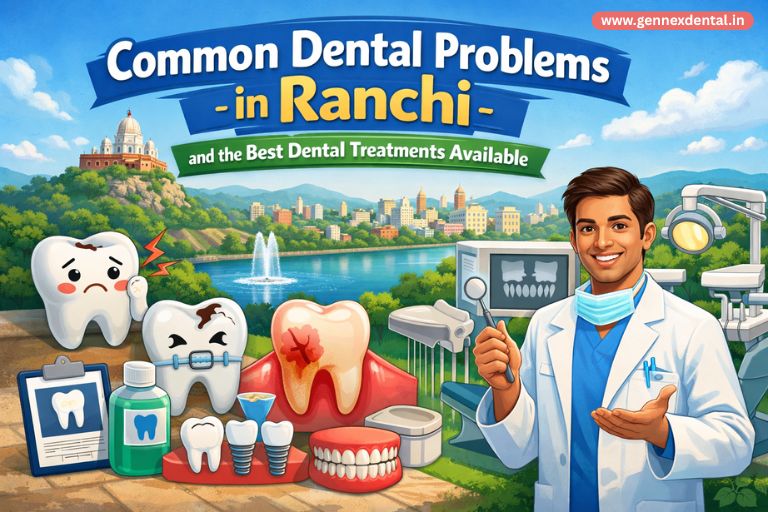
Common Dental Problems in Ranchi — and the Best Dental Treatments Available
Dental health matters — whether you live in Ranchi or anywhere else. In this post we’ll walk through the most common dental problems in Ranchi and the best dental treatments available, what to expect during treatment, and how to choose a dentist who’ll give you lasting results. This guide uses clear, practical language so you can act fast and keep your smile healthy.
1. Tooth decay (dental caries): the most frequent complaint
Tooth decay happens when plaque bacteria produce acids that eat away enamel. It starts as a small spot and, if ignored, becomes pain or infection.
Common symptoms
Toothache or spontaneous pain
Visible pits or dark spots on teeth
Sensitivity to sweets or hot/cold
Best treatments available
Preventive care: fluoride varnish and topical fluoride applications to re-mineralize enamel.
Fillings: composite (tooth-colored) fillings are standard for small to medium cavities.
Root canal therapy: when decay reaches the pulp, cleaning and sealing the canal saves the tooth.
Crowns: for heavily restored or fractured teeth a crown restores strength and function.
What to expect in Ranchi clinics: Many general dentists provide fillings and root canals; look for clinics with modern rotary endodontic tools and quality crown labs.
2. Gum disease (gingivitis & periodontitis)
Gum disease ranges from reversible gingivitis to destructive periodontitis that harms bone.
Common symptoms
Red, swollen, or bleeding gums
Bad breath that doesn’t go away
Loose teeth in advanced cases
Best treatments available
Scaling and root planing (deep cleaning): removes plaque and tartar below the gumline.
Antimicrobial therapy: local antibiotic gels or systemic antibiotics in advanced cases.
Periodontal surgery: flap surgery, bone grafts, or guided tissue regeneration for severe bone loss.
Maintenance: frequent cleanings and proper home care to prevent recurrence.
Early-stage gum disease is reversible — regular dental checkups in Ranchi can catch it early.
3. Tooth sensitivity
Sensitivity to cold, heat, or brushing is common and often linked to enamel loss or exposed dentine.
Best treatments available
Desensitizing toothpaste: potassium nitrate or stannous fluoride formulas reduce nerve response.
Fluoride treatments: in-clinic varnish or gels strengthen enamel.
Bonding or veneers: to cover exposed root surfaces or enamel defects.
Occlusal guards: if sensitivity is from grinding (bruxism), a night guard helps.
4. Broken, chipped, or fractured teeth (dental trauma)
Injuries from accidents or sports can cause immediate pain and cosmetic concern.
Best treatments available
Bonding: composite repair for small chips.
Crowns or onlays: for larger fractures to restore strength.
Root canal + post-core: if the pulp is involved.
Emergency care: timely dental attention reduces the chance of tooth loss.
If a tooth is knocked out, keep it moist (milk or saliva) and reach a dentist immediately — sooner treatment improves outcomes.
5. Impacted or painful wisdom teeth
Wisdom teeth can become impacted, infected, or cause crowding.
Symptoms
Pain at the back of the mouth
Swelling, difficulty opening the mouth
Recurrent infections
Best treatments available
Evaluation with X-rays: to assess position and risk.
Extraction (simple or surgical): removal guided by a general dentist or oral surgeon.
Post-operative care: antibiotics, analgesics, and follow-up for healing.
6. Oral infections and ulcers
Thrush, canker sores, and other infections may be painful and need treatment.
Best treatments available
Topical steroids or antimicrobial rinses for ulcers.
Antifungal therapy for candidiasis.
Biopsy for persistent suspicious lesions.
Choosing the right dental clinic in Ranchi
Quality of care matters. Here’s a quick checklist to help you choose:
Modern diagnostic tools: digital X-rays, intraoral cameras.
Clear treatment plans and written cost estimates.
Sterilization protocols and infection control.
Positive patient reviews and before/after photos.
Access to specialists (endodontist, periodontist, oral surgeon) for complex cases.
Prevention: the best “treatment”
Prevention lowers the need for invasive care. Follow these steps:
Brush twice daily with fluoride toothpaste.
Floss daily or use interdental cleaners.
Limit sugary snacks and acidic drinks.
Visit your dentist every 6–12 months for checkups and cleanings.
Wear a mouthguard for contact sports.
FAQs (short & Yoast-friendly)
Q: How quickly should I see a dentist for a toothache?
A: See a dentist within 48 hours. If there’s swelling, fever, or difficulty breathing, seek emergency care immediately.
Q: Are root canals painful?
A: Modern root canal therapy is performed under local anesthesia and is no more painful than getting a filling; it relieves the pain of infection.
Q: Can cavities be stopped without a filling?
A: Early decay can sometimes be halted with fluoride and improved hygiene, but established cavities usually need a filling.