
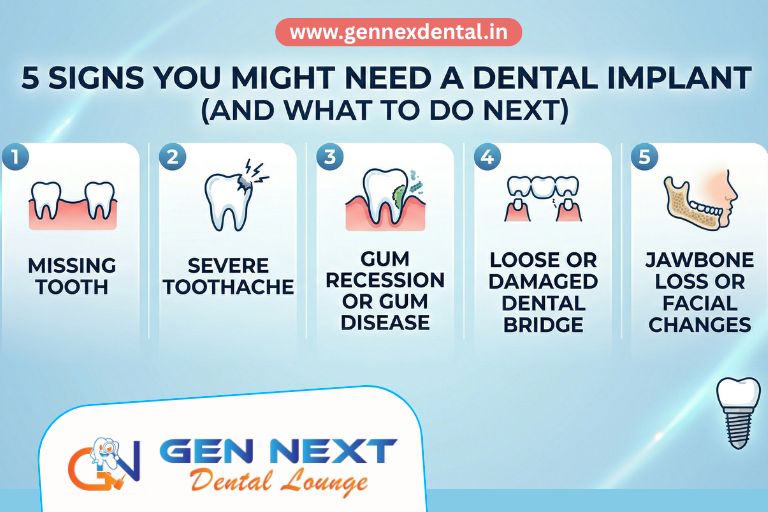
5 Signs You Might Need a Dental Implant (And What to Do Next)
Missing or damaged teeth can affect more than just your smile—they can impact your confidence, speech, and overall oral health. A dental implant is one of the most effective and long-lasting solutions available today. But how do you know if you actually need one? Let’s explore the key signs and what steps you should take next.
1. You Have a Missing Tooth
One of the most obvious signs is a missing tooth. Whether it was lost due to injury, decay, or gum disease, leaving the gap untreated can lead to shifting teeth and bone loss. A dental implant acts like a natural tooth root, restoring both function and appearance.
2. You Have Severe Tooth Damage or Decay
If your tooth is badly damaged and cannot be repaired with fillings, crowns, or root canal treatment, extraction may be necessary. In such cases, a dental implant becomes the best replacement option to maintain oral structure and chewing ability.
3. You Experience Difficulty While Chewing
Struggling to chew food properly can be a sign of weakened or missing teeth. This not only affects digestion but also limits your diet. Dental implants provide strong and stable support, allowing you to eat comfortably again.
4. Your Dentures Feel Loose or Uncomfortable
If you wear dentures and constantly deal with slipping or discomfort, it might be time to consider a more permanent solution. Dental implants can securely anchor dentures, improving stability and confidence.
5. You Notice Bone Loss in Your Jaw
When a tooth is missing for a long time, the jawbone in that area starts to shrink due to lack of stimulation. Dental implants help prevent bone loss by mimicking natural tooth roots and maintaining jaw strength.
What to Do Next
If you notice any of these signs, don’t ignore them. Early action can save you from more complex dental problems later.
Step 1: Consult a Dental Expert
Visit a qualified dentist for a detailed examination. They may recommend X-rays or scans to assess your bone health.
Step 2: Understand Your Options
Not everyone is immediately eligible for implants. Your dentist will guide you on whether you need additional procedures like bone grafting.
Step 3: Plan Your Treatment
Once confirmed, your dental implant procedure will be planned in stages to ensure long-term success.
Step 4: Maintain Oral Hygiene
After getting an implant, proper care is essential. Regular brushing, flossing, and dental check-ups will keep your implant in excellent condition.
Conclusion:
Recognizing the early signs that you may need a dental implant can make a huge difference in your oral health journey. From missing teeth to discomfort while chewing, these symptoms should never be ignored. Consult your dentist today and take the first step toward restoring your confident smile.